
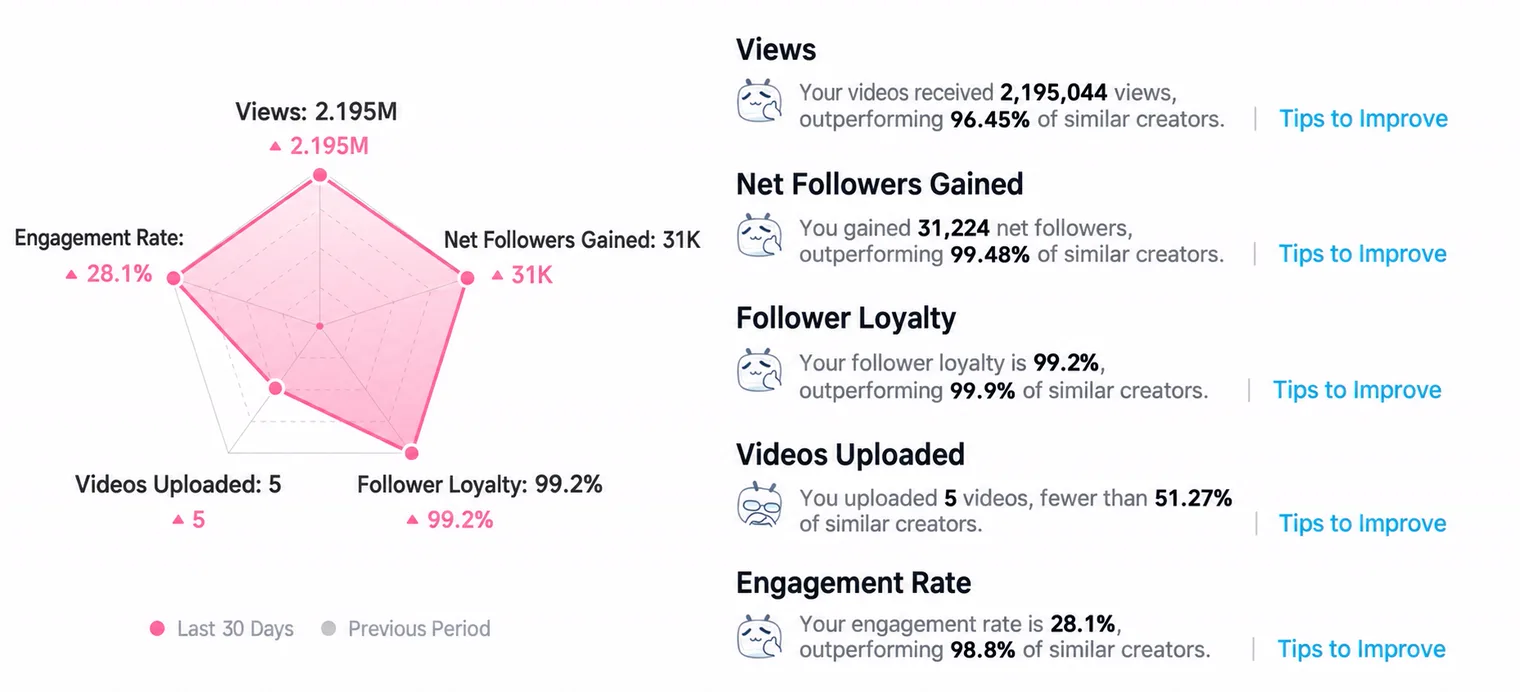
With BreezeBlue, Zhuiyunjie turned the “what ifs” sparked by reading Liu Cixin's Three-Body trilogy into fan-made audio stories. Published on Bilibili, a Chinese video-sharing platform, the stories found an audience: the account grew from zero to 30,000 followers within a month.
Where the “what ifs” began
Zhuiyunjie was captivated by the Three-Body science-fiction trilogy on first reading it in secondary school and has returned to it regularly ever since. The story stays the same; each reading feels different. Some moments remain difficult to let go of, even years later.
“I have a lot of respect for the author's characters, but I also want there to be a few ‘what ifs.’”
Those possibilities began as personal notes. Discovering BreezeBlue, an AI voice creation platform, prompted a new idea: perhaps the notes could become audio stories for others who loved the same characters. The imagined scenes could have voices of their own, letting fellow readers hear another way the story might unfold.
“Could there be other people who feel the same lingering regrets about the story?”
That thought led to the story “What If Wade Became the Swordholder?” In the original, painstakingly established deterrence collapses after the Swordholder's handover. That loss had long troubled Zhuiyunjie. Could Wade, one of the books' most distinctive characters, have changed the outcome? Keeping the original setting in mind, the creator imagined another path.
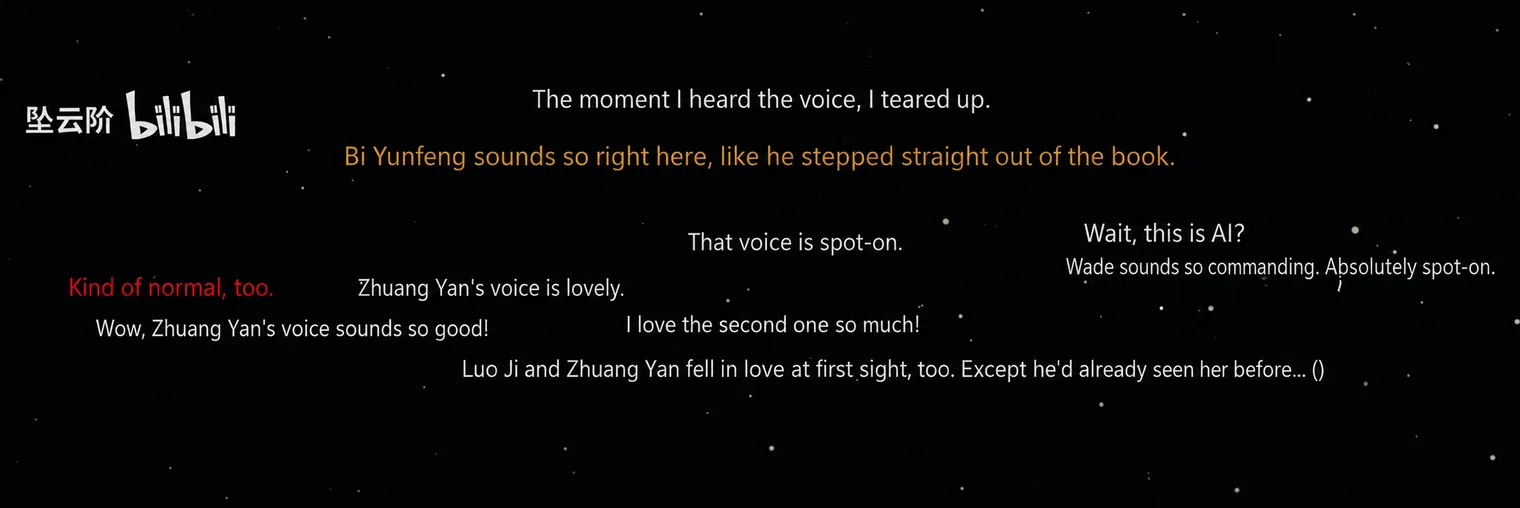
Viewer comments fill the screen as the Wade story plays on Bilibili.
Giving imagined characters a voice
The hardest part of turning the notes into audio stories was finding voices and performances that felt right for the characters.
Traditional production would have meant finding actors whose voices suited the characters, then working with them on the performances. For someone making stories out of a love of the books, the time, effort, and expense presented a substantial hurdle before listeners could hear the work.
Zhuiyunjie had tried several AI voice tools. Many sounded good, but the emotional delivery and subtext still fell short of what the creator imagined. Even with a large voice library, finding the right match was difficult.
BreezeBlue's Voice Design offered another way. A written description or a reference image could become the starting point for a voice. Zhuiyunjie would picture the character in that moment, then describe them to BreezeBlue. Many character voices were designed this way.
Hearing a voice that fit brought a simple reaction:
“Exactly the character's voice I had in mind.”
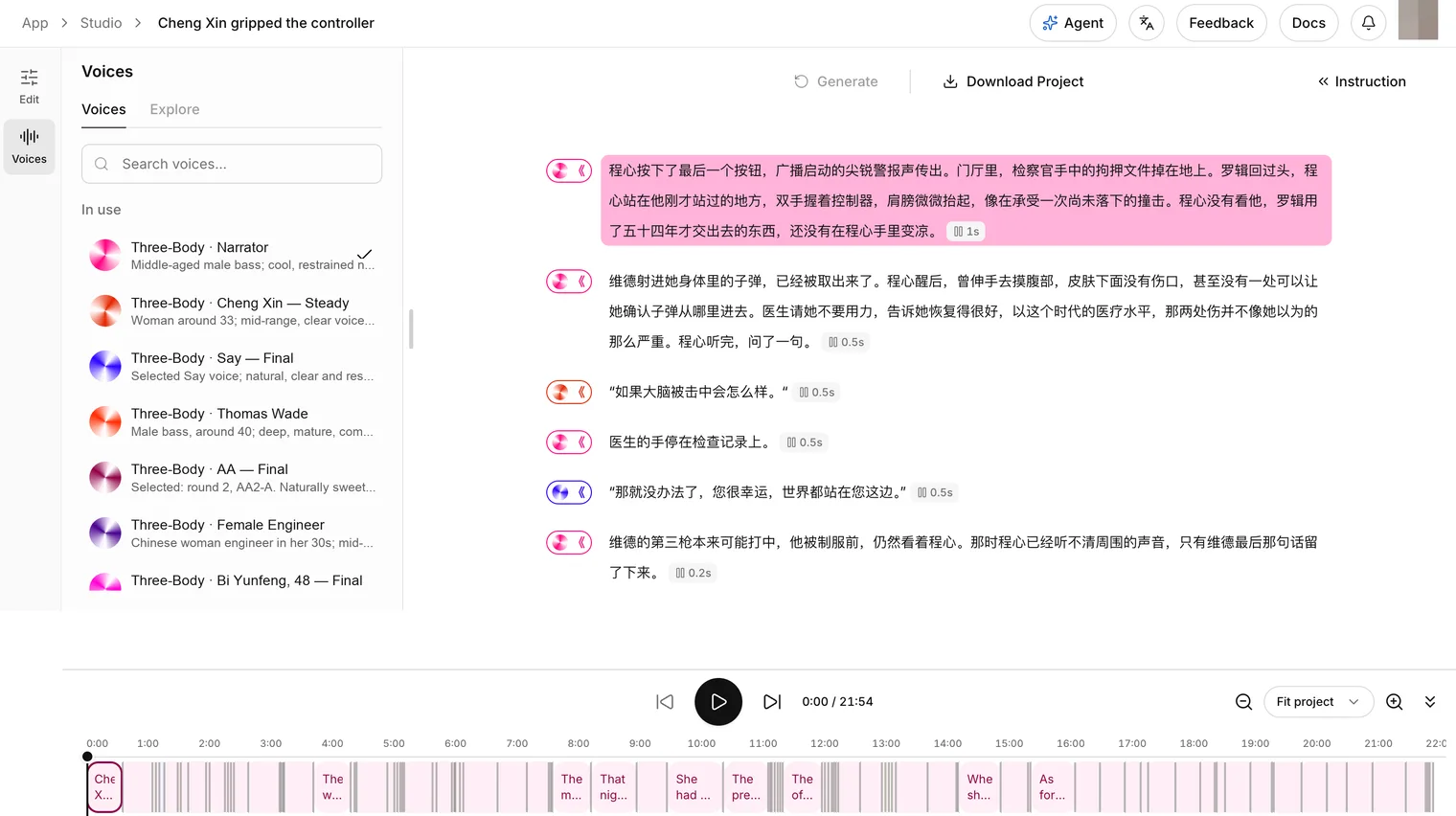
In the Wade story written by Zhuiyunjie, one line mattered particularly to the creator: “I don't care about responsibility. I only care about results.” In the creator's reading of the scene, Wade has gone from holding a sword as a deterrent to drawing it and pressing it against his opponent's throat. The voice needed to convey his ruthless resolve to move forward, whatever it took.
With BreezeBlue, Zhuiyunjie could direct the voice performance in plain language. To shape this line, the creator described the scene and Wade's state of mind in the instructions, bringing their interpretation of the character into the performance.
Zhuiyunjie found that BreezeBlue's Breeze TTS 2 model understood these requests well, often delivering a satisfying performance without many repeated generations. Later, listeners and friends told the creator that this version had moved them to tears.
In experiments with both Chinese and English, the voices often impressed Zhuiyunjie even without extra direction. Instructions were mostly a way to refine the details and bring the performance closer to their reading of the character.
Finding fellow readers beyond the page
The stories began reaching fellow readers. As of September 8, 2026, Zhuiyunjie had published five works. Four had appeared among Bilibili's popular videos, and the Wade story had reached No. 6 on a trending chart.
In comments and in the messages overlaid on the videos, some viewers said the stories had fulfilled a wish. Others called them “tales beyond the original books.”
Voice acting had been the hardest part of making the stories. Now it was something viewers singled out for praise. Many told Zhuiyunjie that the voices made familiar characters seem to step out of the books. Some felt the performances came close to audiobook versions they had heard.
Many viewers began following the stories as a regular series. Requests for the next installment were the most common messages, though quite a few people also asked how the stories were made. A “what if” had brought readers together again, beyond the books.
The responses showed Zhuiyunjie that other readers cared about those unresolved moments, too. Ideas once kept in personal notes meant something to fellow fans. Requests for new installments brought some pressure, along with a sense of achievement and the motivation to keep creating.
Zhuiyunjie has many more stories in mind, from the Three-Body trilogy and other favorite fictional worlds. There are lingering regrets to explore and unfinished stories to imagine, and more of them to share with listeners through BreezeBlue.
“I have always felt that the stories in books live on beyond the page, in the mind of every reader.”